
Tree Risk Assessment in Lawrence, KS
Lawrence Tree HQ rates trees in Lawrence, KS, for the question an ice storm will ask sooner or later. Which part breaks first, and what would it land on? A pin oak gone hollow at knee height gets the same written answer as a soft maple split into twin leaders over a garage. Every finding comes back marked as needed now, next winter or optional.
Request a quote
Say where the tree stands and what worries you about it. A call back follows with a first range.
Because often there's much more practical solution than removing the entire tree, for example, a cable. And each findings can be marked now, but they might not be critical, and we might decide to fix them next winter, when it's cheaper due to the ground being more hard and stable.
- Each defect rated by its odds of failing and the harm done
- Mallet and probe on every trunk we rate
- Work sorted into now, next dormant season and optional
- Cables placed by ANSI A300 Part 3
- Results in writing, ready for an insurer or a board
Estimate your assessment cost
Typical prices per tree for Lawrence jobs. Your quote follows a look at the job.
$200 to $500
Call (785) 538-3193 for your priceAt a glance
| Risk assessment | From $100 up to $250 a tree |
|---|---|
| Assessment levels | Three: a walk-by survey, a 360-degree check from the lawn, and climbing or decay-testing work |
| Written report | $150 (low) to $450 (high) on one tree; $300 (low) to $700 (high) on several |
| Owner's duty | Dead, diseased or dangerous trees must come out; the city gives 5 days' notice |
| Cable system | $200 to $350 for each tree cabled |
| Synthetic cables | Inspected every six months |
Tree Risk Assessment and Cabling Services
Level 2 Ground Inspections
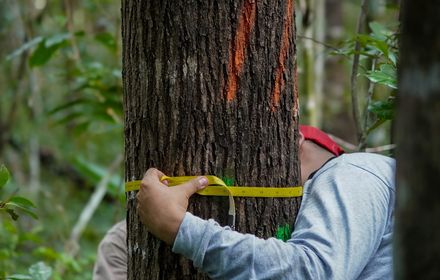
Usually we walk around each tree once. We check the crown with binoculars. We test it with mallet tapping. If it has a dull sound, then it's hollow inside. Next, we assess if we need to put the steel rod inside each cavity. Also, we write down all the tree details, such as height and trunk width.
Split Leaders and Included Bark
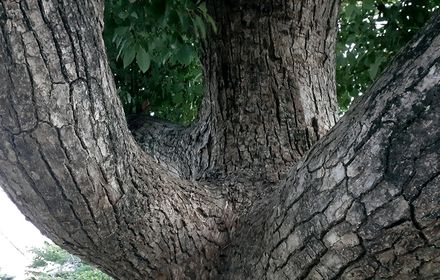
Split leaders are when you have two equal stems with one fork, and included bark is when the bark is trapped in the joint. Ice adds extra load exactly on this joint, so it could pull apart more easily. Multi-stem trees break more easily than a single one.
Cabling and Bracing Weak Forks
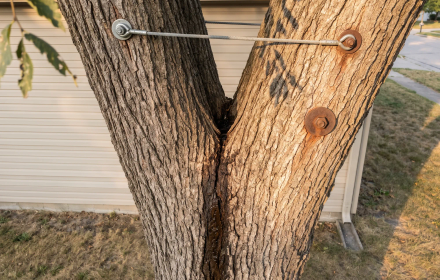
Two leaders are tied up to each other, two-thirds up from the fork to the top. If it's a weak fork, that's usually done when the rest of the tree is sound and you don't want to bring it down.
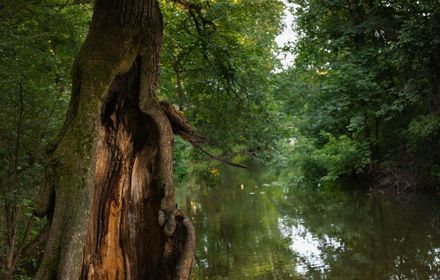
Decay and Hollow Trunks
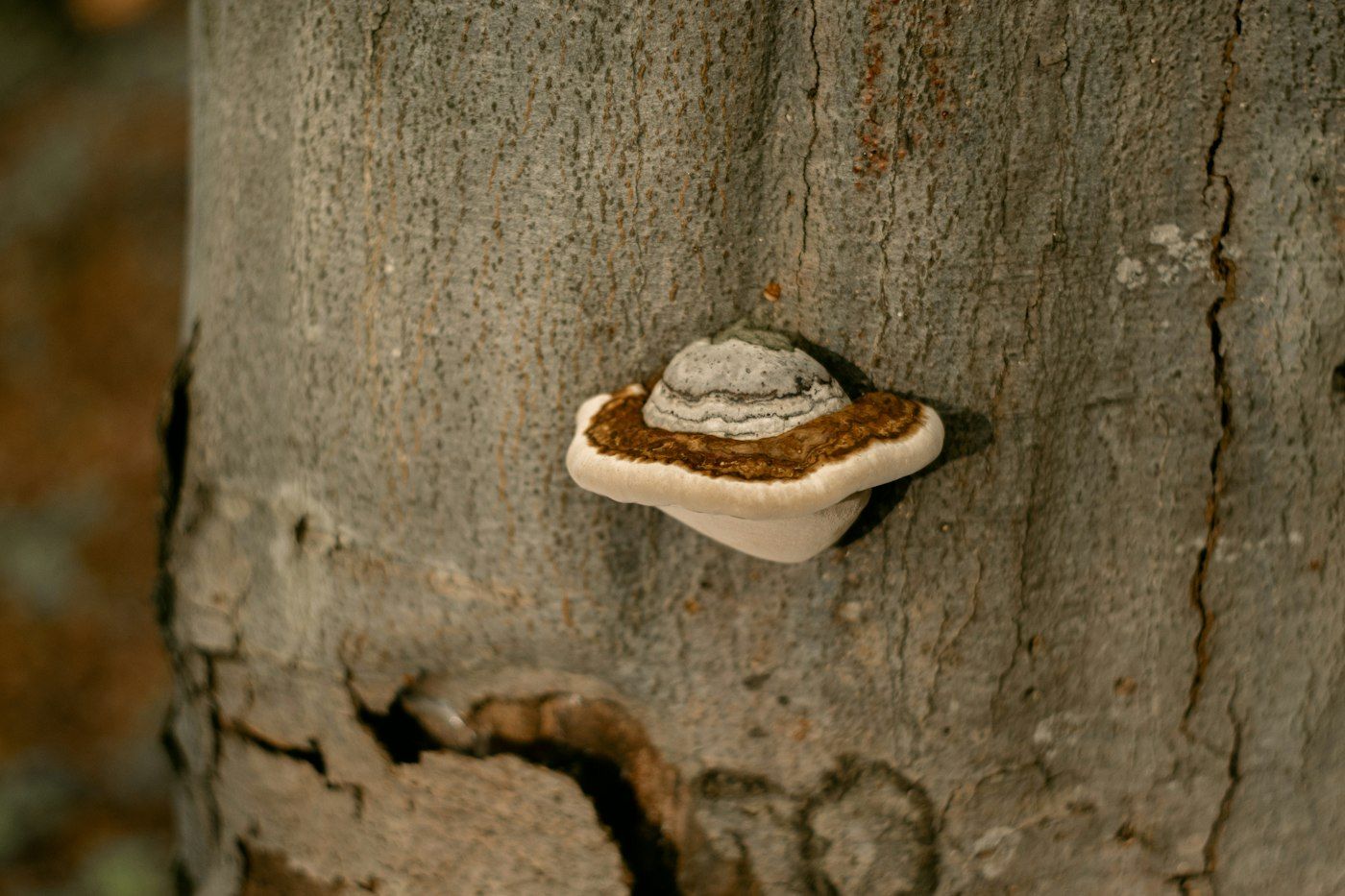
If you see mushrooms at the roots, most likely there's going to be rot inside. Same for conks on the bark. Only the sound wood ring decides it, which is quite difficult to check without climbing. Especially if it's Level 3 or higher, it would require climbing and decay testing tools.
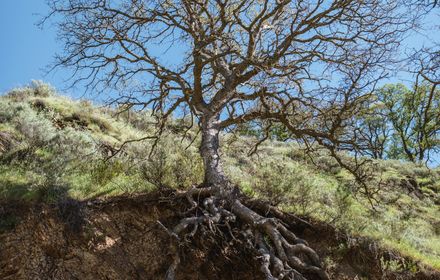
Roots and Lean
Any lean that suddenly changed, or one past 15 degrees, is among the signs that call for an assessment, along with heaving soil. Lawrence code also requires a permit to dig within 10 feet of a right-of-way tree.
More Assessment Work
Level 1 Walk-By Surveys
One quick pass over many trees for an HOA common area or a block of rentals.
Written Reports
One tree or a whole property, dated, for a landlord's file or a dispute next door.
Checks After Ice or Wind
Whether a torn limb can be shortened to a lateral, or the tear reaches the main stem.
What Does a Tree Risk Assessment Cost in Lawrence?
Rating one tree costs $100 at the low end and $250 at the high end. The fee buys no pruning and no removal. Those get priced afterward, line by line, from what the rating found.
| Item | Low | High |
|---|---|---|
| Risk assessment, one tree | $100 | $250 |
| Written report, one tree | $150 | $450 |
| Written report, 2+ trees | $300 | $700 |
| Cable system, per tree | $200 | $350 |
| Crew of 3, per hour | $200 | $260 |
The first four rows are national arborist cost figures (2026). The crew rate is a Lawrence, KS figure (2025).
What Changes the Fee
- How many trees. Rate them all in one trip and the drive gets paid once.
- Which level. Level 3, with aerial inspection or decay testing, is often offered at a premium.
- Spoken or written. Advice given while walking the yard costs less than a dated report.
How a Level 2 Assessment Goes
Targets before wood
The assessor first notes what a failure would hit. The ANSI method weighs consequences next to likelihood, so one crack ranks higher over a bedroom than over open lawn.
Crown from below
Binoculars on each major union and on dead wood above it.
Sound and probe
Mallet taps down the stem, and a steel rod into each cavity to measure how much solid wood is left around it.
Roots and soil
The lean gets measured, and any recent trench, new drive or grade change gets noted.
Rating and a list
Each finding gets odds of failing (improbable, possible, probable or imminent) and a fix, sorted into now, next dormant season and optional.
Cable It, Thin It or Take It Down
Most weak unions on an otherwise sound tree can be cabled or reduced and kept.
Unless there is a risk of the tree falling on your property, you can definitely run with the cable. It’s much cheaper, and worst case scenario, if it’s going to fall, then you’ll just need to get rid of it. But if you’re worried about what it might hit, then for sure taking the whole tree down is the only option.
Cable and Keep It
Steel is TCI’s standard answer once a crotch has begun to open (TCI is the trade’s magazine for tree crews, 2024). A dynamic synthetic system suits a sound young union, lets the crown move in wind and needs no holes drilled, but the line needs regular checks.
Take Weight Off the End
A reduction cut shortens a heavy limb to a lateral whose diameter is at least one-third of the cut limb’s. Topping is not a substitute. Lawrence bans it outright on street and park trees.
When It Has to Come Down
A hollow with a thin shell, a dead main stem, or soil cracking open opposite the lean. Under Lawrence code 18-111, taking it down is then the owner’s job.
Kansas Weather and Lawrence Trees
Freezing rain adds quite a lot of weight on the tree. And a lot of trees are infested with ash borer or other beetles, which leads to the tree being weakened, and even some extra weight with ice would get it down.
Tree Risk Assessment and Cabling in nearby areas
Tree Risk Assessment and Cabling FAQs
What's the difference between an arborist and a tree service?
The city licenses a business, not an arborist. An arborist is a person trained in tree care, usually with some kind of certificate. The tree service company is who does the work, and they might have a few arborists on board.
Is hiring an arborist for a risk assessment worth it?
It's definitely worth checking trees over the roof or driveway. If it's a small tree in the open lawn, it usually isn't worth the effort. You cannot tell how sound it is, but an arborist can assess it.
Who looks after a tree between the sidewalk and the curb?
The parks director answers for the trees between the sidewalk and the curb, so phone the city before hiring a contractor to do anything about them.
Can a cabled tree still fail?
Yes, it can. For example, a cable would not help if there is some rot in the roots of the tree itself, or for the trunk below the fork. Also, split wood stays split.
How often should a cable be checked?
Synthetic dynamic systems call for an inspection every six months. Book one more after the first ice storm of any winter.
Can I check my own trees between assessments?
Check when the leaves are out. If you see a crack growing longer, call us. If you see mushrooms at the roots, call us. If you see soil lifting on one side, call us.
Get a quote on your tree risk assessment and cabling
Give the street, a rough height and whatever sits below the crown. The call back brings a range and the parts that could raise or lower it.
Request a quote
Ring (785) 538-3193 to talk it over now, or write the tree up here for a call back.