
Dead and Hazardous Tree Removal in Lawrence, KS
Lawrence Tree HQ clears dead, dying and hazardous trees from Lawrence, KS yards, from ash killed by the borer to Scots pines browned out by pine wilt. First we check whether its wood is still sound enough to climb, because that decides both method and price. Brittle ones get an aerial lift or a pull line, never a climber. We also work in Eudora, Baldwin City, De Soto and Tonganoxie.
Request a quote
Say where the tree stands and what worries you about it. A call back follows with a first range.
Taking down a dead tree in the winter, before it falls, can be smart, since dead wood turns more brittle every month. If the tree doesn't fall and the trunk turns brittle, a lift truck would be required and not a climber, and the price of that climbs high.
- Wood soundness checked before a climber ties in
- Limbs over shingles lowered on rope, never dropped
- Pine wilt wood gone before beetle season
- Elm wood handled to Lawrence's beetle rule
- Stump grinding priced as its own line
Estimate a dead tree removal
Typical prices per tree for Lawrence jobs. Your quote follows a look at the job.
$240 to $460
Call (785) 538-3193 for your priceAt a glance
| 40 ft tree, standard | $480 to $920 |
|---|---|
| Ash with its stump | $750 to $2,400 per tree, city estimate |
| Brittle wood | A dead ash runs near triple a live one |
| Arborist risk check | $100 to $250 per tree |
| City notice | 5 days to remove a dead or dangerous tree |
| Pines with pine wilt | Removed before May 1, when the beetles come out |
Dead Tree Removal Services
Ash Killed by the Borer
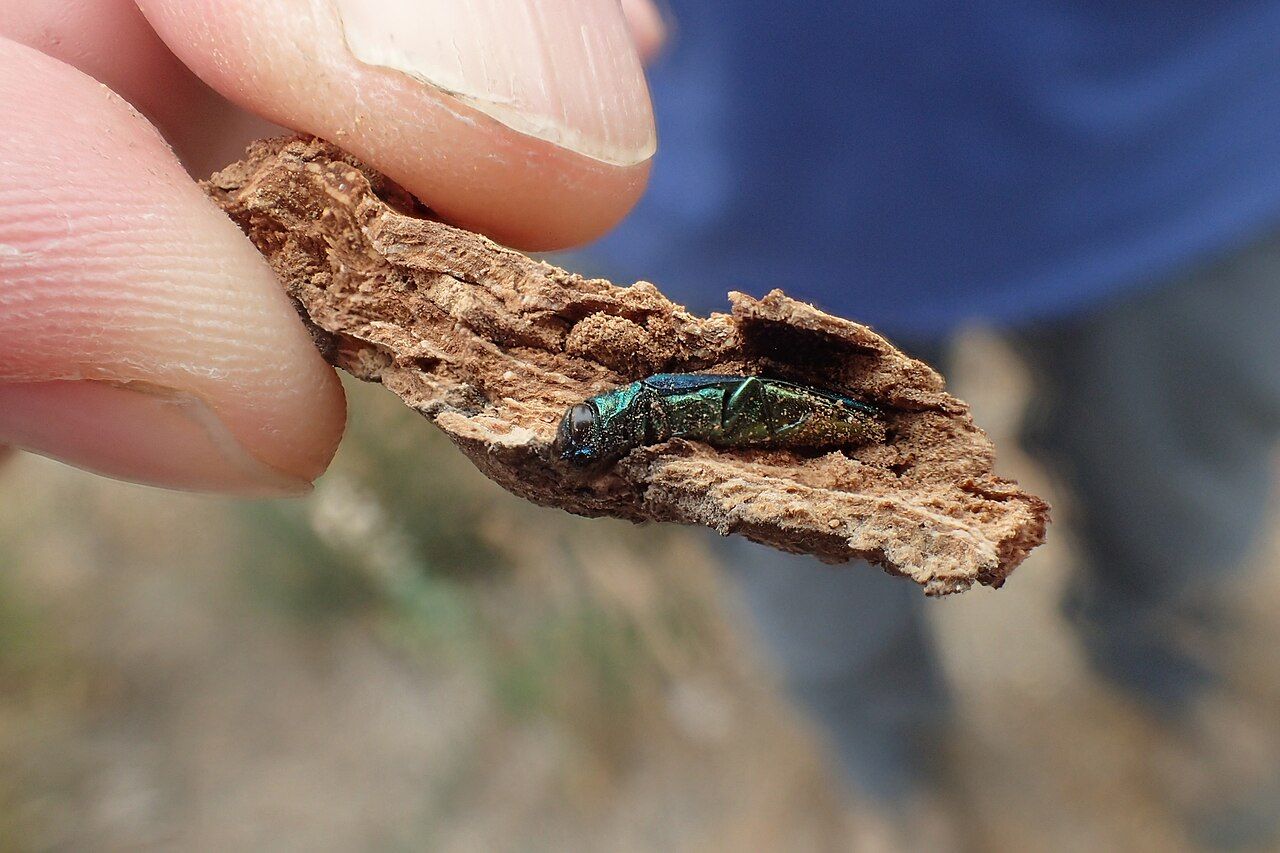
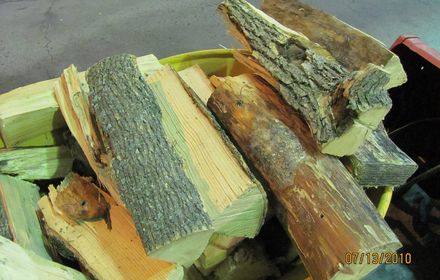
Douglas County has had the borer since 2015. By city count, Lawrence holds more than 10,000 ash, public and private, and half of all city ash inspected in 2016 were already poor or dead. Ash dries out and turns brittle fast once larvae have tunneled through it. Many tree companies won't put a climber into an infested ash with as little as 20% decline.
Pines Lost to Pine Wilt
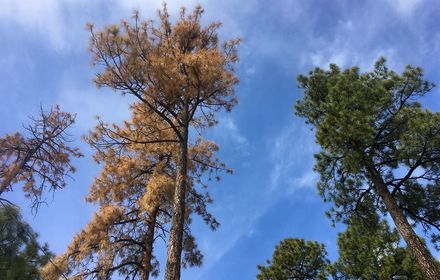
Pine wilt has devastated Scots pine plantings in eastern Kansas, and Austrian, white and mugo pine can carry it as well. A sawyer beetle moves the nematode between pines. The advice is to cut an infected pine and getting it off the property before May 1, when beetles emerge. So we fell these in winter or early spring, wood and all.
Elms Dying From Dutch Elm Disease
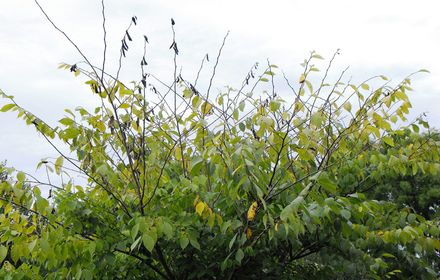
Elm firewood falls under a city rule meant to kill those bark beetles that spread its fungus, so ask before you keep any of it for the fireplace. This disease has all but wiped out old-growth elms statewide, so an elm still standing on an old lot is worth a careful look before anyone condemns it.
Dead Tops and Limbs After Drought
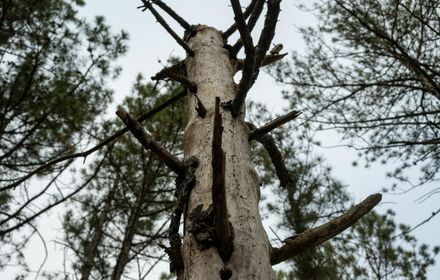
City forestry staff blamed the 2011 to 2013 drought for dead limbs that showed up on ash and other species afterward. A top that died back often has live wood lower down. Here we ask first whether taking out deadwood leaves something worth keeping.
Cracked, Hollow or Newly Leaning Trunks
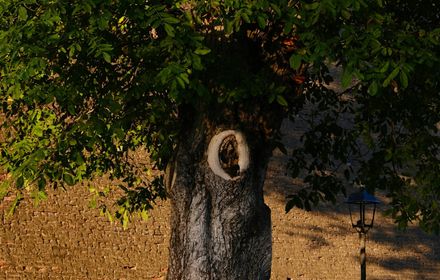
Green leaves prove nothing about safety. Deep cracks, cavities or mushrooms near its base call for an arborist's look, and a tree risk assessment covers the roots and any lean. Its target decides the urgency. A hollow oak in a pasture is not the same risk as one over a bedroom.
Other Hazard Work
Dead Branches Over a Sidewalk
Lawrence wants 8 feet of clear space above sidewalks and streets, with street lights and corner sight lines left open. Dead limbs hanging over a walk break that rule. They also drop on people.
A Neighbor's Dead Tree
Its owner decides whether it comes down. A neighbor who ignored a plainly dead one may be liable when it falls, as general practice goes, so dated photos and a short written note are worth keeping.
One Dead Limb Over Shingles
When a single big limb has died and everything else is in full leaf, only that limb comes off. It gets roped and lowered in sections, so gutters never take a hit.
Should a Dead Tree Be Removed?
We would recommend that any dead tree within reach of hitting a house, garage, or a street be removed immediately. When a tree is dead and dries out, the roots tend to rot and will no longer hold the tree up. If, by chance, the tree is standing alone on a large lot with nothing in its way if it were to fall, then of course that tree can stay. A good way to tell if a tree is dead is by looking at the crown of the tree. If it is bare, or the tree has low sprouts or loose bark, then it is most likely dead.
Wait for spring and compare your trees with the same kind of trees on neighboring properties that you can see when you take a walk down your road.
- Bare canopy. Dead or dying branches across most of it.
- Sprouts low on its stem. New shoots from the base while the top stays bare, common in a dying ash.
- Bark coming off. Loose sheets, with winding tunnels under them and D-shaped exit holes on ash.
- Trouble at ground level. Fungus near the base, cracked or lifting soil on one side.
How Dead Trees Come Down Safely
Judge the wood
Our climber taps the stem with a sounding mallet, probes any cavity and checks main unions from below. Dead wood that still rings solid can be climbed and rigged. Wood that sounds hollow or flakes under a probe cannot.
Pick a method
Sound wood gets a climber with rigging. Brittle wood goes to an aerial lift, sometimes a crane, so nobody hangs a rope from a limb that might snap. Open ground with nothing near lets a brittle one be felled whole.
Pull, do not trust the hinge
When felling dead wood, its hinge cannot steer. A pull rope tied high up runs to a ratchet winch that holds every inch it gains. Cutting, wedging and pulling alternate in short steps until it falls where it was aimed.
Handle wood by disease
Pine wilt wood leaves before May. Elm wood is chipped, debarked or burned to Lawrence’s April 1 rule. Firewood should not be moved in from other counties.
Stump and cleanup
Brush feeds a chipper, logs get cut to stove lengths, and grinding takes the stump at least 5 inches below grade, deeper if you plan to replant there.
Remove It Now or Wait for Winter
Winter is off-season and often costs less. Frozen ground carries trucks without rutting a lawn. But dead wood hanging over your house does not wait for a better rate. Ice in January is exactly what brings it down.
All of It or Only the Deadwood
If what died is one limb or the top third, removing it can leave a tree worth keeping for years. If its main stem is dead, cracked or hollow, it comes down. We prefer selling you that smaller pruning job when the wood allows it. An ash with the borer and a pine with wilt both fall in that second group, since neither recovers.
We would recommend that if you had a large tree with a dead limb hanging over your garage, but the rest of the tree was green, then pruning that limb would be best. This way you’re saving your garage from any potential damage, and you are also leaving the rest of the healthy tree standing.
Dead Tree Removal Cost in Lawrence
| Job | Typical range |
|---|---|
| Removal, tree about 20 ft | $240 to $460 |
| Removal, tree about 40 ft | $480 to $920 |
| Removal, tree about 60 ft | $720 to $1,390 |
| Removal, tree about 80 ft | $960 to $1,850 |
| Ash removal and stump, city estimate | $750 to $2,400 per tree |
Height ranges are Lawrence, KS figures (2025) for standard removal. The ash line is the estimate in the City of Lawrence’s 2017 EAB readiness plan. Hauling and grinding vary by job.
If you don’t have the time or a vehicle to get rid of the wood, you have to pay for hauling.
Parts that push a dead-tree bill up or down:
- Time since it died. Removal costs about twice as much once an ash is infested and three times once it has died, since methods change when wood turns brittle.
- Climber or machine. An aerial lift bills more per hour than a climber, a crane more again, and one of them is the only safe choice on a rotten stem.
- What sits below. Shingles, wires and fences mean lowering every piece on rope.
- Disease handling. Pine wilt and elm wood leave the site or get chipped, so hauling stays in the price.
- Stump. Grinding gets priced on its own row. Skip it if you like.
Dead and Hazardous Tree Removal in nearby areas
Dead and Hazardous Tree Removal FAQs
Do I have to remove a dead tree in Lawrence?
In Lawrence, we recommend removing any dead tree that has been left standing too long and is noticeably dead. The owner is responsible under the city code. After five days' notice, a city crew could come out and charge the owner. An infected elm counts as a public nuisance.
Do I need a permit to remove a dead tree on my own lot?
If a dead tree is on your own lot, then no city permit is required, and it can be taken out without any kind of city permit. The strip of property along the curb is considered public land, and taking a tree out there needs a city permit, with a $50 base fee. As always, if there are any questions about permits, ask your contractor or the city.
Can my ash be treated instead of removed?
If you have an ash tree that seems to be healthy or lightly infested, in most cases it can be treated instead of spending the money it would cost to remove it. Treatment usually requires an injection into the tree about every two years. If the tree is badly thinning at its crown, then it is most likely time to remove the tree soon.
What should happen to the wood from a dead elm or pine?
If you happen to have an elm or pine tree that is found to be dead, the elm wood needs to be debarked by April 1. If the pine tree has wilted, it should be gone by May 1, according to city requirements. If you happen to have any kind of ash tree that has been brought down and cut into firewood, this ash firewood is fine to burn where permitted.
Will insurance pay to take down a dead tree?
Homeowner's insurance typically will only pay after damage has been done by a fallen tree. Taking the tree down first is considered maintenance and will be on the homeowner. If it's a neighbor's fallen tree, ask your insurance provider.
Can I cut down a small dead tree myself?
Yes, you can cut down a small tree yourself, with no city license required. A city license is required for businesses. It's best if there is open ground all around. Then it is typically fine for a homeowner to do. If the tree is taller than the distance to the house, definitely call a professional.
Get a quote on your dead and hazardous tree removal
Give the street, a rough height and whatever sits below the crown. The call back brings a range and the parts that could raise or lower it.
Request a quote
Ring (785) 538-3193 to talk it over now, or write the tree up here for a call back.